
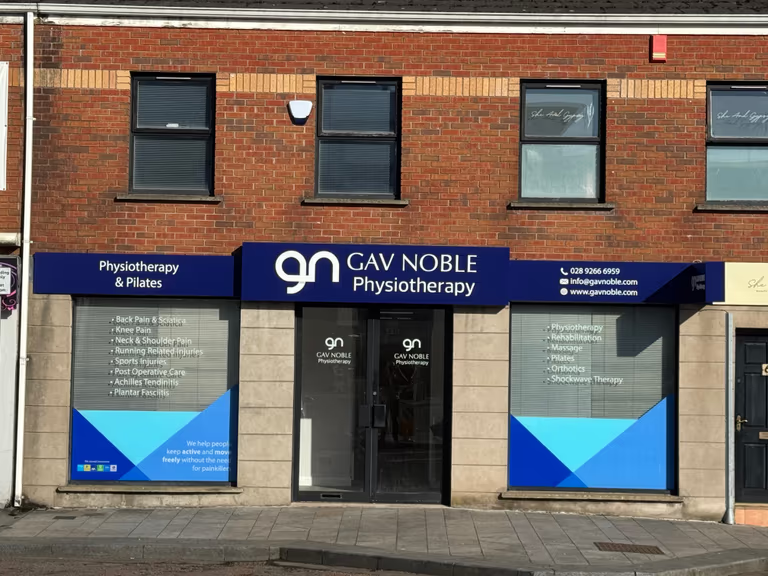
Physiotherapy

Physiotherapy in Lisburn, Northern Ireland

At a Glance

Physiotherapy in Lisburn

Living with back pain, sciatica or a joint problem that will not settle? Gav Noble Physiotherapy is a chartered Physiotherapy clinic on Antrim Street in Lisburn, treating patients from across Northern Ireland since 2015. We find the root cause of your pain, not just the symptoms, so you get better and stay better. No GP referral, and most new patients are seen within 48 hours.

  • What is it? Hands-on chartered Physiotherapy that treats pain at the root, without painkillers or surgery.
  • Who is it for? Back, neck and joint pain, arthritis, postural pain and post-surgery recovery.
  • How long? A 45-minute first assessment, with most conditions resolved in 4 to 6 sessions.
  • Referral needed? No GP referral. Most new patients are seen within 48 hours.

Chartered Physiotherapy in Lisburn for lasting pain relief

Key Takeaways

Physiotherapy treats pain and injury by restoring movement, without painkillers or surgery.

Treatment is delivered by chartered physiotherapists registered with the HCPC and the CSP.

Most conditions resolve in 4 to 6 sessions; chronic and post-surgery cases run 6 to 12 over 2 to 4 months.

No GP referral is needed, and most new patients are seen within 48 hours.

What Physiotherapy treatment involves

Physiotherapy is a chartered healthcare profession that treats pain, stiffness and injury by restoring how your body moves. It works without painkillers or surgery, using hands-on treatment and targeted exercise instead. Physiotherapy treatment in Lisburn is led here by HCPC-registered, CSP-chartered physiotherapists at Gav Noble Physiotherapy.

We start by watching how you actually move, because the site of pain is often not its source. A stiff hip shows up as a sore knee; a weak lower back shows up as an aching shoulder. Movement assessment and specific clinical tests let us diagnose the root cause, then build a plan around it using manual therapy, joint mobilisation and manipulation, soft tissue mobilisation and myofascial release, dry needling, and exercise prescription.

We cover the full musculoskeletal picture: the spine including back and neck, the upper limb through shoulder, elbow and wrist, and the lower limb through hip, knee, ankle and foot. That means back pain, lower back pain, sciatica, slipped and herniated discs, neck pain and whiplash, frozen shoulder and rotator cuff injury, hip and knee pain, arthritis and osteoarthritis, plantar fasciitis, tennis and golfer's elbow, repetitive strain injury, postural pain and headaches. Whatever the diagnosis, the aim stays the same: treat the cause, not just the symptoms.

Who it helps and what to expect

This service suits desk-based office workers carrying postural and lower-back pain, manual workers with lifting and joint injuries, recreational runners and golfers, post-surgery patients needing structured rehabilitation, and over-45s protecting mobility as joints stiffen. It also covers teenagers with sports injuries, pregnant and post-natal patients through women's health Physiotherapy, and anyone stuck on an NHS waiting list who needs to be seen sooner.

Book if pain has lasted more than two weeks, keeps returning, or limits what you can do day to day. Book too if you were discharged from a short course of sessions before the problem was genuinely fixed. You start with a free 15-minute discovery visit, then a full 45-minute assessment and a written treatment plan. From there it is hands-on treatment paired with exercises taught and filmed in the clinic, re-assessment at every visit, and discharge with a written maintenance programme. Maintenance Pilates classes are available for longer-term support.

Techniques and equipment we use

The tools behind the work are practical, not gimmicks. We use a Shockwave Therapy machine for stubborn tendon problems, fine needles for dry needling and acupuncture, and electrotherapy including TENS and ultrasound therapy where it genuinely helps. Assessment uses movement screening, gait analysis and strength assessment technology. For rehabilitation we use resistance bands, a Pilates reformer for clinical Pilates, and an exercise prescription app such as PhysiApp so your filmed programme travels home with you. Where needed we fit custom foot orthotics or orthotic insoles, apply kinesiology and rigid sports tape, and advise on ergonomic and postural aids for the desk you sit at all day.
Why Us

What makes our Physiotherapy different

Book an Appointment — opens in a new tab

Chartered physios only. a legally protected title, not a weekend certificate. Every clinician is HCPC registered.

Root-cause approach. we fix why the pain started, so relief lasts beyond the last session.

Hands-on every session. real manual therapy, not just a printed sheet of exercises.

Same therapist throughout. one trusted clinician from assessment to discharge.

Your Treatment

How your treatment works

Pricing

Pricing tailored to your treatment plan

Your pricing is explained personally during your free discovery visit, so you know exactly what is involved before committing to anything. Most treatment may be covered by private health insurance, and we handle direct billing, so most insured patients pay nothing out of pocket. You also get a realistic session estimate in writing after your assessment, so there is no open-ended course of paid sessions.

Physiotherapy

Why Lisburn patients choose our Physiotherapy

  • 01Long waits, damp winters and desk-bound pain

    Lisburn has a real problem getting people timely Physiotherapy. NHS waits across the Belfast and South Eastern Health and Social Care Trusts run long enough that the Department of Health operates a Waiting List Reimbursement Scheme, and by the time many patients are finally seen, an acute injury has already turned chronic. The second frustration we hear just as often is being discharged after a handful of sessions before the problem is genuinely fixed, which leaves people cycling through the same pain every few months.

    The commuter belt adds its own load. The daily Lisburn-to-Belfast run means an hour seated before the working day even starts, then a day at a desk, which reliably produces chronic lower-back pain, stiff necks and postural problems in working-age adults. Damp, cold Northern Irish winters bring a seasonal spike in arthritis flare-ups, joint stiffness and aching backs. And across the wider rural catchment, plenty of people have no chartered physio within an easy drive, so they default to the GP or the medicine cabinet instead.

    Waiting rarely saves anything. Putting treatment off costs mobility, independence and time off work, and all three are far harder to win back than the price of being seen early. Seeing a private physio in Lisburn needs no GP referral and no waiting list, so the clock starts the day you call.

  • 02Where we are and who we treat

    We are based at 66 Antrim Street — opens in a new tab in the centre of Lisburn, in County Antrim, with a catchment that reaches across the River Lagan into County Down. Free parking sits outside the clinic, and Lisburn Railway Station on the Belfast to Dublin line is a five-minute walk away. We are close to Bow Street Mall and Lagan Valley Hospital, about a mile from the M1, minutes from the A1 at Sprucefield, and on the A3 Hillsborough Road for the west of the area.

    That makes our physio clinic in Lisburn easy to reach from right across the Lagan Valley and Greater Belfast, and a

    chartered physiotherapist in Lisburn is rarely more than a short drive away. Lambeg is barely five minutes up the A1, with

    Dunmurry, Maghaberry, Hillsborough and Drumbo all inside ten minutes. We treat patients from Moira and Aghalee off the

    M1 to the west, Glenavy and Crumlin to the north-west, Carryduff and Saintfield on the A49, and Belfast, Dromore,

    Ballynahinch and Banbridge across the wider catchment.

    Students and staff at South Eastern Regional College are a short walk away, and Sprucefield Retail Park is minutes from the door.

  • 03How we assess and treat your pain

    Our approach is built on named methods, not vague promises. Assessment combines a full history, movement assessment, specific clinical tests and, where relevant, gait analysis. Treatment draws on manual therapy, joint mobilisation and manipulation, soft tissue mobilisation and myofascial release, dry needling and acupuncture, the McKenzie method for disc-related back pain, electrotherapy including TENS and ultrasound, Shockwave Therapy for stubborn tendons, and kinesiology taping, all paired with exercise prescription and therapeutic exercise.

    Every clinician is a chartered physiotherapist registered with the HCPC and a member of the CSP. "Physiotherapist" is a legally protected title in the UK, which matters when something is structurally wrong and needs proper diagnosis rather than guesswork. Treatment is recognised by Bupa, AXA, Aviva, Nuffield, WPA and Simplyhealth.

    Gav Noble Physiotherapy · Physical Therapy Clinic, Lisburn — Page Content v2 · Page 4 of 7

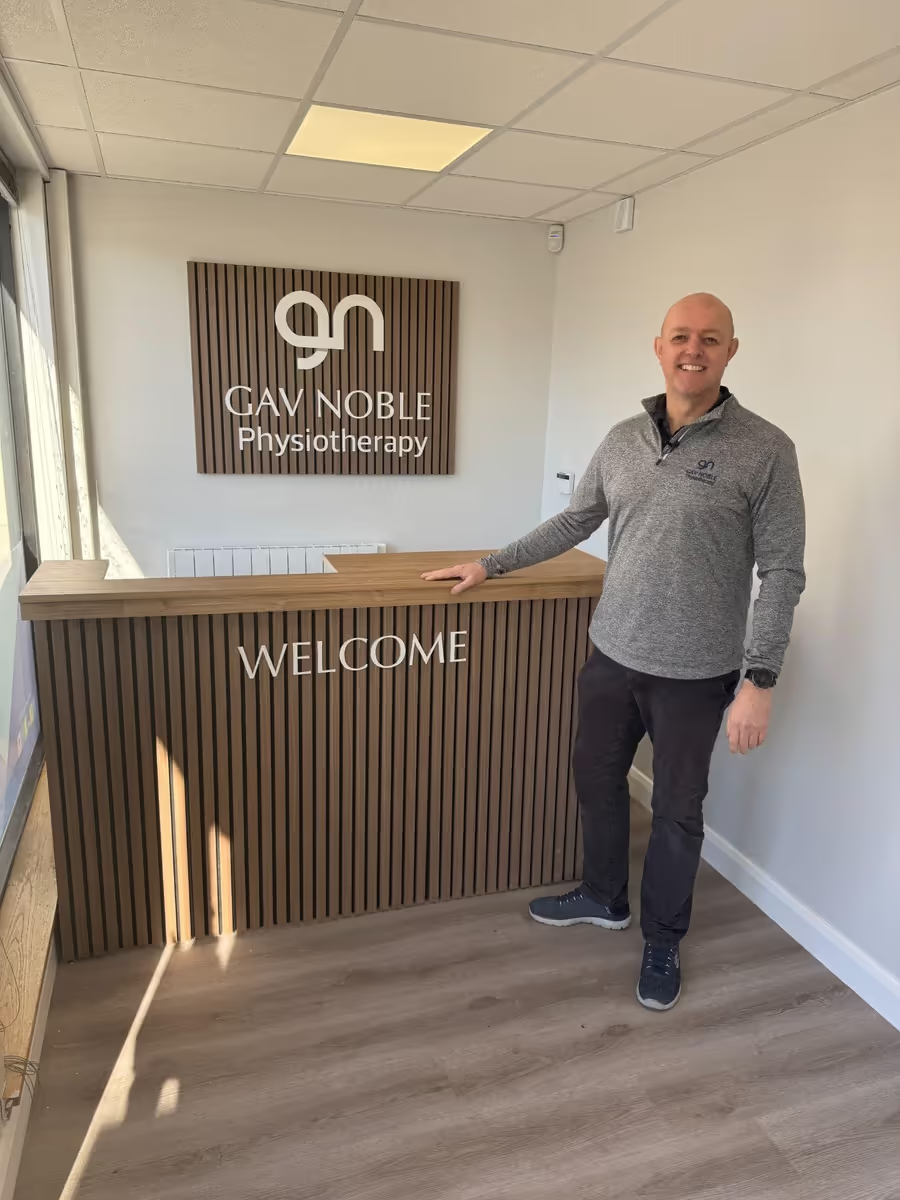
The reception area at Gav Noble Physiotherapy in Lisburn
Questions

Does Physiotherapy hurt?

Physiotherapy should not be painful, though some treatment and exercises can feel uncomfortable, much like after a workout. A little muscle soreness for a day or two is normal as your body adapts. Sharp or worsening pain is not, so tell your physiotherapist straight away and they will adjust. The goal is always to reduce your pain, never add to it.

What is the difference between a physiotherapist and a chiropractor?

Physiotherapists treat pain using movement, exercise and hands-on therapy, and are regulated by the HCPC.

Should I see a physiotherapist or just rest my back pain?

Rest alone rarely fixes back pain, and it can let an acute problem turn chronic. Lying up for more than a day or two allows the muscles supporting your spine to weaken, which often makes the next flare-up worse. Physiotherapy finds why the pain started and corrects it. If back pain lasts more than two weeks, keeps returning, or limits daily activities, book an assessment.

Is my back pain a slipped disc or something else?

Most back pain is not a slipped disc. Facet joint irritation, muscular strain and postural overload are far more common, and they respond well to treatment. A genuine disc problem usually sends pain, numbness or pins and needles down the leg rather than staying in the back. A 45-minute assessment with specific clinical tests tells you which you have, without needing a scan first.

How long does Physiotherapy take to fix back pain?

Most back pain improves within the first few sessions, and many cases resolve in four to six. Acute episodes often settle in two to three. Long-standing back pain, disc-related sciatica and post-surgery cases typically run six to twelve sessions across two to four months. You get a clear estimate in writing after your assessment, so you know what you are committing to.

Can Physiotherapy help my sciatica?

Yes. Physiotherapy is one of the most effective treatments for sciatica. Treatment combines manual therapy to ease nerve compression, specific exercises often based on the McKenzie method, and posture correction to stop it returning.

What if Physiotherapy is not right for my back or neck pain?

That is exactly what the free 15-minute discovery visit is for. You explain what is wrong, and we tell you honestly whether Physiotherapy is the right answer, with no obligation and no payment. Some spinal problems need imaging or a consultant opinion first. If we do not think we can help, we will say so and point you toward who can.