
Rehabilitation

Physical Rehabilitation in Lisburn, Northern Ireland

At a Glance

Physical Rehabilitation in Lisburn

Recovering from an injury or an operation? Physical rehabilitation in Lisburn at Gav Noble Physiotherapy helps you rebuild strength, movement and confidence with a clear, structured programme. Led by chartered physiotherapists, your recovery is planned around your body and your goals, from post-surgery rehab to getting back to sport, work and daily life. Book a free discovery visit and take the first step.

  • What is it? A structured, progressive programme that rebuilds strength and movement after surgery or injury.
  • Who is it for? Post-surgery and injury recovery, from ACL and joint replacement to fractures and strains.
  • How long? A programme, not a single visit. It continues until you are back to full function.
  • Referral needed? No GP referral. Most new patients are seen within 48 hours.

Structured rehabilitation, from surgery or injury back to full function

Key Takeaways

Physical rehabilitation is a structured, progressive programme that rebuilds movement, strength and function after injury or surgery.

It is led by chartered physiotherapists (HCPC and CSP), who are qualified to rehabilitate after surgery, unlike a general trainer.

It is a programme, not a one-off appointment, and it continues until you are back to full function.

We work alongside your surgeon's protocol, and prehab before surgery is available too.

No GP referral is needed, and most new patients are seen within 48 hours.

What a rehab programme involves

Physical rehabilitation is a structured recovery programme that helps you rebuild movement, strength and function after an injury, an operation or a long-term problem. Rather than treating pain in isolation, it guides your body back to full activity step by step. At Gav Noble Physiotherapy, your programme is led by chartered physiotherapists and built around a full assessment, so it targets exactly what you need. Whether you are looking for post surgery rehabilitation in Lisburn or injury rehabilitation in Lisburn after a sprain, fracture or tear, the approach is the same.

A programme combines hands-on treatment with graded exercise: an initial rehabilitation assessment, then manual therapy, joint mobilisation and soft tissue work alongside a progressive exercise programme, strength and conditioning, range of motion and flexibility work, balance and proprioception training, gait re-education where needed, and return-to- sport or return-to-work testing at the end. You get a video-guided home exercise programme so you always know what to do between sessions. From post-surgery rehab to getting back to sport or work, the goal is simple: to get you moving well and confidently again, without relying on painkillers.

Who it helps and what to expect

This service is for people recovering after an operation such as a knee or hip replacement or ACL reconstruction, anyone rebuilding after a sprain, strain, fracture or other injury, people preparing for surgery who want to recover faster (prehab), those needing knee replacement rehabilitation or post-operative Physiotherapy in Lisburn, athletes working back to sport safely, workers returning to a physical job with confidence, and anyone left weak, stiff or cautious after illness or a long spell of inactivity.

You begin with a full assessment, no GP referral needed, covering your injury or operation, how you move now, your pain and your goals. From there we build a step-by-step plan with clear stages and a home programme, progress it as you get stronger, and re-assess to guide you safely back to full activity. Recovery timeframes depend on the injury, the operation and you, and your physiotherapist gives you a realistic guide at your assessment rather than a fixed promise.

Programmes and equipment we use

We run defined programmes for post-operative rehab, ACL and ligament rehab, knee and hip replacement rehab, sports injury rehab, prehab before surgery, and return-to-work rehabilitation. The work uses resistance bands, dumbbells and weights, an exercise ball, balance and wobble boards, foam rollers and a treatment couch, with Shockwave Therapy where a stubborn tendon needs it. To support you between sessions we use kinesiology and sports tape, supports and braces where appropriate, resistance bands for home, and printed plus video exercise plans so your programme travels home with you.
Why Us

What makes our rehabilitation different

Book an Appointment — opens in a new tab

We work alongside your surgeon. Your programme follows your surgeon's protocol, so rehab and surgery pull in the same direction.

Structured, phased programmes. A clear plan with stages to work towards, not a sheet of exercises and a wave goodbye.

Continues until full function. We see your recovery through to sport, work or daily life, not just until the pain eases.

Progression tracked every session. Each visit re-checks where you are and advances the plan, so recovery keeps moving.

Your Treatment

How your rehabilitation works

Pricing

Pricing tailored to your rehab programme

Because rehabilitation is a programme rather than a single visit, the cost depends on your injury or operation and the length of the plan you need. We explain it clearly once we understand your situation, and you can start with a free 15- minute discovery visit to talk through your recovery before committing to anything. There is no GP referral needed, and most treatment may be covered by private health insurance, which we bill directly.

Rehabilitation

Why Lisburn trusts us with their recovery

  • 01When hospital treatment ends but recovery has not

    As a dedicated rehabilitation clinic in Lisburn, the most common story we hear is being discharged from hospital or NHS Physiotherapy too soon, with a sheet of exercises but no real guidance, so recovery stalls and people are unsure whether they are even doing it right. After surgery at a Belfast hospital such as Musgrave Park, NHS follow-up rehabilitation is often limited to a few sessions, leaving people around Lisburn without the ongoing, structured programme that real recovery needs.

    Waiting lists for NHS rehabilitation in Northern Ireland are long, and many people around Lisburn live rurally or do physical, manual work, so injuries and operations are common, yet ongoing rehab can mean repeated trips to Belfast when a local programme would be far easier to stick to. Busy working lives and long commutes push people to rush back too soon and risk a setback, when a guided programme that fits around work would get them back safely and for good.

    Local conditions add to it. Northern Ireland's icy, wet winters bring a spike in falls, fractures and joint injuries, and the cold, dark months make it harder to stay active during recovery, so structured rehabilitation matters most exactly when motivation dips.

  • 02Where we are and who we treat

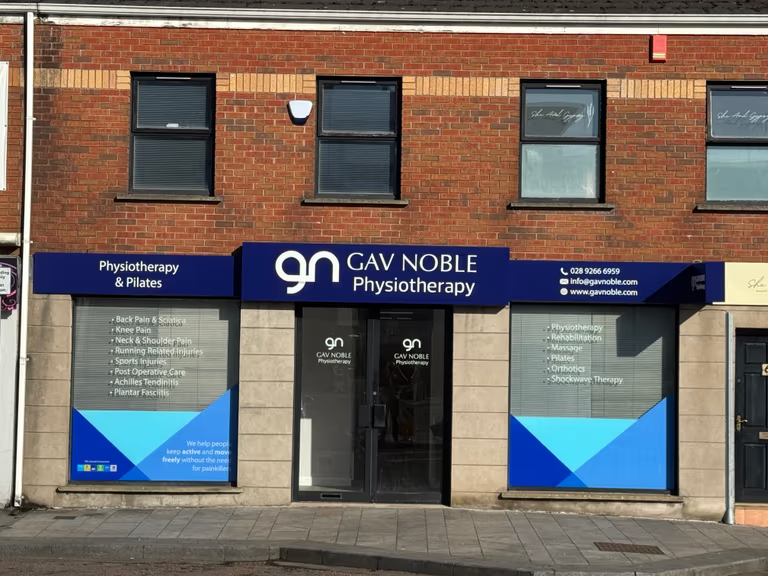
    Our clinic is at 66 Antrim Street — opens in a new tab in the centre of Lisburn, in County Antrim, close to Lagan Valley Hospital and a short run from the Belfast hospitals whose surgeons refer patients on for rehab. There is parking nearby and Lisburn Railway Station is a few minutes away, which matters when you are recovering and travel is tiring.

    We welcome people travelling in from Lambeg, Dunmurry, Maghaberry, Hillsborough and Drumbo, all within ten minutes, and from Moira, Glenavy, Carryduff, Belfast, Dromore, Crumlin, Saintfield, Aghalee, Ballynahinch and Banbridge.

    Because the Belfast hospitals feed so many post-operative referrals, plenty of our rehab patients travel the short distance out to Lisburn for a structured programme they can actually stay with.

  • 03Qualified to rehabilitate, not just to train

    Plenty of gyms and trainers offer injury recovery, but only HCPC-registered physiotherapists are qualified to rehabilitate people after surgery or serious injury, and clients often cannot tell the difference. Our programmes are delivered by chartered physiotherapists and cover post-operative rehab including ACL reconstruction, knee replacement rehabilitation in Lisburn, hip replacement and rotator cuff repair, alongside fractures, ligament and tendon injuries and deconditioning after illness.

    Cutting rehabilitation short is a false economy, because incomplete recovery often leads to re-injury, lasting weakness or a poor result from an otherwise successful operation. The value is getting it right once, with a structured, progressive programme, return-to-sport and return-to-work testing, and a team that works alongside your surgeon. Rehabilitation here connects naturally to our Physiotherapy, sports injury and pain control services, and to clinical Pilates for ongoing strength.

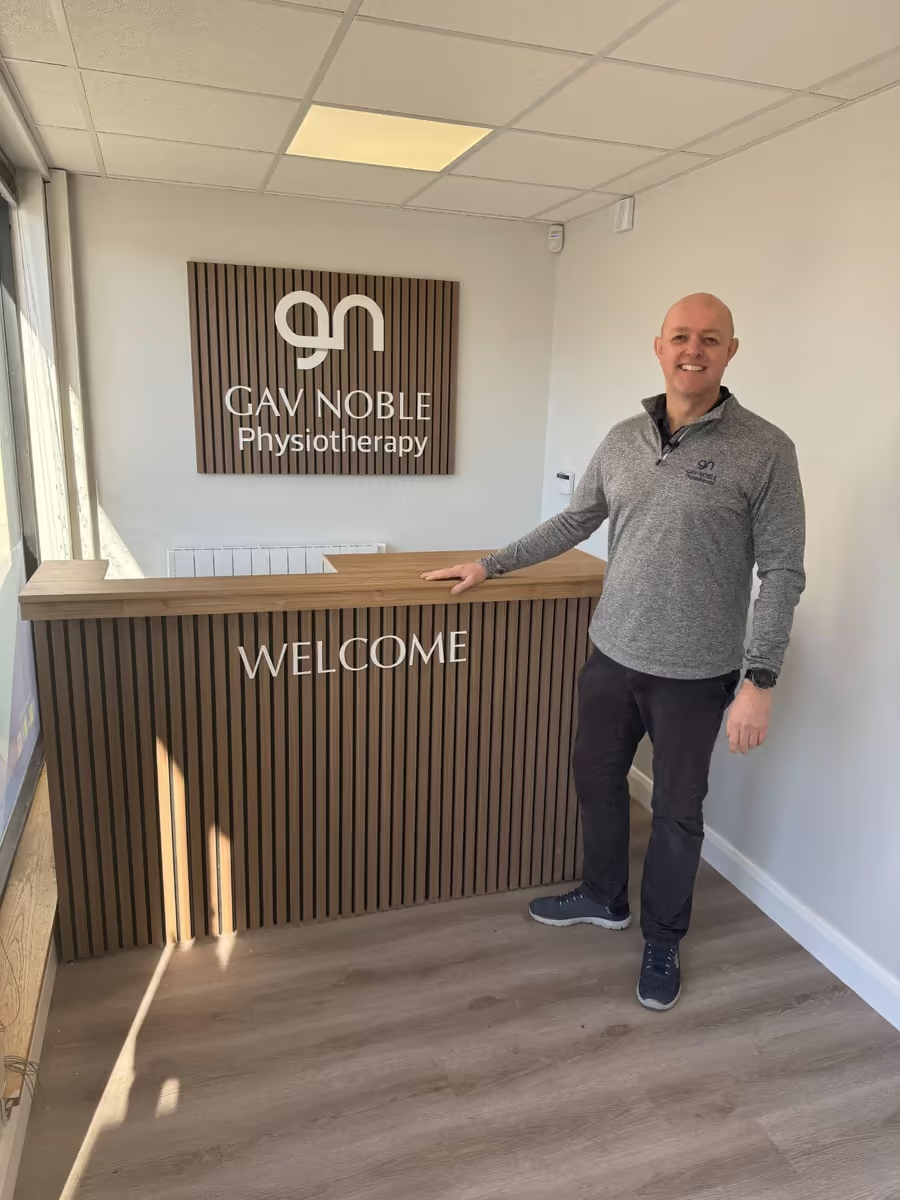
The reception area at Gav Noble Physiotherapy in Lisburn
Questions

What is physical rehabilitation?

Physical rehabilitation is a structured programme that rebuilds your strength, movement and function after an injury, operation or illness. Rather than treating pain alone, it guides your body step by step back to full activity. At Gav Noble Physiotherapy it is led by chartered physiotherapists and built around an assessment, so every stage is matched to your recovery and your goals.

What injuries and operations do you rehabilitate?

We rehabilitate a wide range of injuries and operations, including ACL reconstruction, knee and hip replacements, shoulder surgery, fractures, sprains, and ligament and tendon injuries. We also help people rebuild strength after illness or a long spell of inactivity. Every programme starts with an assessment, so your recovery is planned around your specific injury or surgery.

What is the difference between Physiotherapy and rehabilitation?

Physiotherapy often treats a specific problem, such as easing pain or improving movement. Rehabilitation goes further, with a structured, progressive programme that takes you all the way back to full function, sport or work. In practice the two work together: your physiotherapist treats the problem, then rehabilitates you so the results last and the injury is less likely to return.

Can rehabilitation help before surgery, not just after?

Yes. Preparing before an operation, often called prehab, can make a real difference to your recovery. Going into surgery stronger and moving well often means an easier recovery afterwards. We build a short, focused programme in the weeks before your operation, then continue your rehabilitation once you are ready, so you get the best possible start.

How long does rehabilitation take after surgery?

It depends on the operation and on you, so we cannot give a single figure. As a guide, many programmes run across several weeks to a few months, with steady progress reviewed along the way. Your physiotherapist gives you a realistic timeframe at your assessment and adjusts it as you recover, so you always know what to expect.

How soon after an operation can I start rehab?

This varies by operation and by what your surgeon advises, so timing is always guided by their instructions. In many cases gentle rehabilitation begins soon after surgery to protect movement and prevent stiffness, but we follow your surgeon’s protocol first. Bring your surgeon’s notes or discharge advice to your assessment, and we will plan a safe start for your recovery.

Do you work with my surgeon?

Yes. Where you have had or are having surgery, we build your programme around your surgeon’s protocol and discharge advice, so your rehabilitation and your operation pull in the same direction. Bring any hospital notes, scan results or discharge instructions to your assessment. Chris Noble, who leads our rehabilitation, works alongside consultants and surgeons across Belfast hospitals.

Can you treat frozen shoulder and rotator cuff injuries?

Yes. Frozen shoulder and rotator cuff injuries, both after surgery and without, are among the conditions we rehabilitate most. Treatment combines hands-on therapy to restore movement with a progressive strengthening programme to rebuild the shoulder safely. Because recovery can be slow with these conditions, a structured, staged programme makes a real difference to the end result.

What is involved in ACL rehab?

ACL rehabilitation in Lisburn is a phased programme that rebuilds knee strength, control and confidence after reconstruction, working alongside your surgeon’s protocol. Early stages focus on restoring movement and basic strength, later stages on power, agility and sport-specific movement, finishing with return-to-sport testing before you go back. The full programme typically runs several months, guided by how your knee responds rather than a fixed date.

Will I get back to sport or full activity?

Our whole approach is built around getting you back to sport, work and daily life, and we take your recovery all the way