

Best Exercises For Neck Pain At Your Desk
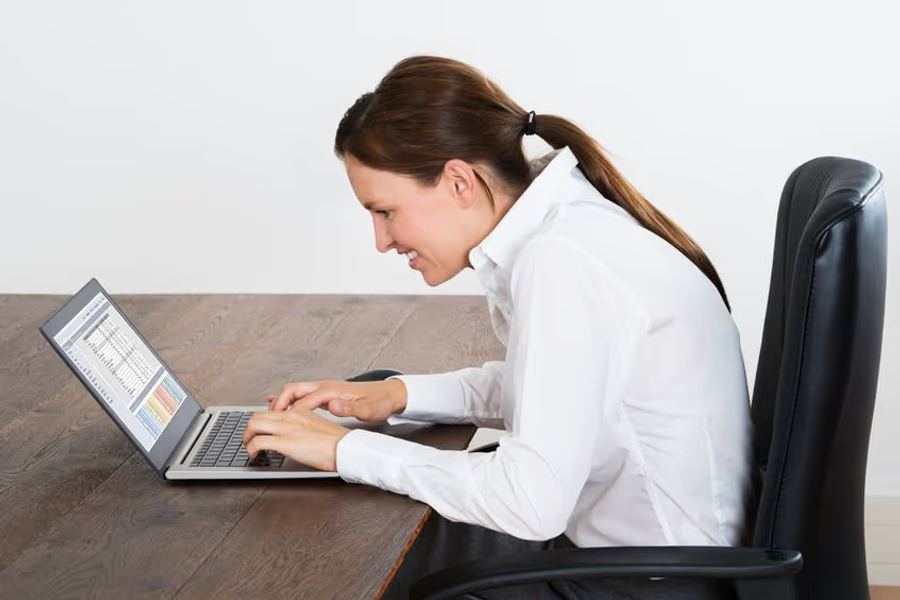
If the pressure that you feel in your neck is, well, a neck pain, you are far from being alone. According to National Institutes of Health, neck pain is very common, with about one in three individuals affected by it once a year.
Women are affected more often than men and they may recur while the symptoms continue to go away on their own.
Unfortunately, the pain is chronic in around 1 in 10 people with recurring neck pain.1 “Neck pain is a common occurrence that about 75 percent of people encounter at some point in their lives.”
“Women, older adults and those involved in road traffic collisions, whiplash injuries are at greater risk.”
Neck pain is mostly linked to bad posture.
If you’re sitting eight hours a day on a screen, you start to get bad alignment. Some people’s poor posture from sitting like this causes neck pain. Aside from poor posture, incorrect placement of the head when talking on the phone will cause neck pain. The so-called “text back,” is back pain that comes from tilting the head down to look at a smartphone screen.
Stress can also cause pain in your back. In particular, women tend to bear tension in the neck and shoulders.
The good news is that workouts (which you can do at your desk!) will relieve the discomfort and tension in the back. Try warming up your neck muscles by putting a heat pad on your neck for a few minutes before you start the exercises. Or, to calm those tight neck muscles, take a warm bath or shower.
Below are a few easy exercises to try at the office:
**
Sit Up Straight
**
It may sound simple but by sitting up straight, keeping a healthy posture is an effective way to prevent pain. We all appear to slouch throughout the day so make a point of being mindful of your seated posture. Rotate your shoulders back through the entire day. Hold on for a couple of seconds, relax and repeat the move 3 or 4 times.
One movement that feels fantastic and can be performed from either a sitting or standing position is to draw your arms backwards and place them on your buttocks with your fingertips pointing downward. Try pinching your shoulder blades together then. Keep back a couple of seconds. Relax 4 times, and repeat.
**
Neck Flex stretch
**
This movement can be performed to sit on or standing at your desk. Holding the place for a whole 3 seconds is critical.
You should do the exercise sitting or standing. Think straight ahead. Now look down for a few seconds at the floor, then for a few seconds up at the ceiling.
Turn your head to the right very slowly, as far as possible. Keep in for three seconds. Turn your head back to the middle and keep this spot for 3 seconds.
Turn your head towards the left and keep for 3 seconds. Bring your head back to the middle, at last. Repeat four times.
Sit up straight and look forward. Tilt your head to the right and try to touch your right ear. Keep back a couple of seconds. Relax, and set your head straight. Now turn your head to the left and try to touch your left ear. Repeat three or four times.
**
Chin Tuck
**
Sit up straight with your back behind in a chair. And lower the head down towards the jaw. Bring your chin in but not down, and look straight ahead. Keep for 5 seconds on this. Repeat this ten times, and do it once a day.
**
Stretch with Chin Raise
**
Lift Tilt your chin up instead of bringing it down as you slightly turn your head to the right. This will raise your nose. Hold back 20 seconds. Now slowly turn it to the left, bringing your chin up as you look towards the ceiling. Don’t lift your shoulders up when you move. Do this exercise 3 times per side.
**
Thoracic spine stretch
**
Stand up and raise your elbows to your sides. Place your hands on your head at the back. Slightly draw your elbows back as you stretch your spine. You will look ahead with your eyes. Hold for 10 seconds on this. Repeat five times.
Other methods of treatment aside from workouts, here are several many ways to try to alleviate pain:
- Tai chi – Research show that it is effective in the treatment of musculoskeletal disorders. The activity promotes movement and gradually increases the range of motion. The exercise provides low impact motion in the back, which can relieve discomfort and improve work.
- Be mindful of your posture when seated at your desk. You should sit up straight and position the keyboard so your elbows are flexed at 90 degrees. Make sure that your shoulders are back, and not slouching forward.
- Quick get up and walk frequently during the day are helpful. Get up at least once an hour from your chair, and spend 3 minutes walking around your office.
- Be mindful of how you hold your head while on your mobile phone or at your laptop. You should not lean your head forward or slouch when you look at those screens.
- Don’t pin the phone between your shoulder and ear while you multitask. It’s an instinctive motion but it strains the muscles of the spine. Stop this position while you’re on your phone. Consider using a headset or speakerphone for any conversation that will last longer than five minutes.
- Consider using an ergonomically built keyboard with a view to reducing muscle strain. The keys are divided into two or three classes in a “set split-keyboard.” It allows for a different angle to the user style than a standard straight keyboard. The keyboard is split into several independent sections in a “adjustable split keyboard; the angle can be adjusted as desired. It is not for everyone and it will take some to get used to.
If you have any further questions, or need to know more, simply check our website
here
, or call us 028 92666959, or email info@gavnoble.com